פציצות

הוידאו בלוג שלי בו אני מדבר על נושאים קריטיים בתחום ההפקה המוזיקלית, ניתוחים שוטפים בנושאים ביטחוניים בוערים וסקופ בלעדי על מה שבאמת קרה בנחיתה על הירח.

My Video Blog in which I talk about critical issues in the world of music production, national security analysis and what really happened during the moon landing.

The Story Behind My Song

Greg Egan’s science-fiction novel is set in the year 2067 in a world where the solar system has been enclosed by an unbreakable barrier put in place by an unknown extraterrestrial force. Nick Stavriano is hired to find a brain-damaged woman named Laura Andrews, who has disappeared from her institution. Following her to Hong Kong, Stavriano’s case leads him closer to the mysterious force that’s “quarantined” the solar system.


What I find fascinating is the fact that the hero in this story is aided by a skull full of neural modifications. The book starts with him receiving loads of information directly to his brain while he is sleeping. The whole idea of these neural “moods” is quite similar to the way we install apps on our phone. And that’s so cool, because imagine how easy it would be to have maps, calendar and what’app directly in your brain.


The “ensemble” is a special kind of mood which exploits aspects of Quantum Physics to avoid the collapse of the wave function. That opens up the possibility of choosing from infinite alternate realities which starts a crazy chain of events culminating in a grand feast of what would be considered completely impossible.


Yonatan Rukhman – The True Ensemble

Greetings mankind!

I am very excited and pleased to serve you my new song, “The True Ensemble”. After years of working in the recording studio producing bands, song-writing for various artists, producing as part of various projects,  I have now decided to give birth to a new project, my own new sound, using my own name. I am also using my own services as vocalist…so what you hear is totally, 100% myself. The genre is electronic, house-to-pop, and generally I think I am going to be quite versatile on this project as I think and hope more will follow. The inspiration for the lyrics of this song came from science fiction literature that I am particularly fond of, but I will talk about that in a separate post. For now, just listen to my new track! Hope you enjoy 🙂

Party@Ben Shemen 6

שמחתי לחמם את הרחבה עבור DJ Moradi ו-Sunshine, הנה הקלטה של החלק המרכזי של הסט, בערך השעות 23:30-00:30, קצת פאנקי, האוס, טכנו וחוזר חלילה… דגש מיוחד על הטראק Chunky של Format:B שזוכה לתואר אחד הטראקים הטובים ששמעתי אי פעם…(!!seriously). 🙂

Tracklist:

1. Faul & Wad, Pnau – Changes (Tocadisco Sunny LA Remix)
2. Disclosure, Mary J Blige – F For You
3. Claptone, Jimi Tenor – Party Girl
4. Format:B, Pleasurecraft, Chris The Voice – Coltrane
5. Yonatan Rukhman – I Want To Know What Love Is (Work In Progress)
6. Format:B – Chunky
7. Rene Amesz, Mendo – Tribeca
8. Miguel Bastida – Moudness
9. Antonio Thagma – Doing That

Alternate Perceptions – Psion EP

Very proud to announce the release of this new EP. Me and my pal Kooki Salinas have taken a break from the Yud Kei project and have gone into some deeper electronic stuff. The EP is released on UK imprint Baroque Records and early feedbacks from heavy weights such as Richie Hawtin, Joseph Capriati, Marco Carola, Michelle De Hey, Mitch Alexander (Microcastle) have been really positive 🙂

Here are some links:


Link to Beatport: https://pro.beatport.com/release/psion/1688798

I’ll write a short review of each of the tracks:


  1. Psion – A downtempo hypnotic synth driven track, with some acid synths going in and out while a constant driving motiv sets the mood. The term “Psion” refers to psionic hypernatural powers.
  2. Time Binding –  In the Deep House domain, alternating percussion patterns take you through sequenced basslines and liquid atmospheres. Time Binding is a term taken from Philip K Dick’s novel “Flow My Tears The Policeman Said” and is the effect of a drug described in the book, KR-3. The spoken words are also taken from that book.
  3. Armitage – Melodic Techno. A strong rythmic pattern is the ground for an evolving landscape in melody and warped effects.

Enjoy!

Rewire: A story of hope & dismay

Pro Tools, Cubase & Ableton Live have been the three softwares that shaped me as a Sound Engineer/Producer. We haven’t bought Pro Tools for the new studio yet, so this leaves us with the other two, and I said to myself: why not enjoy the best of two worlds? Rewire!

So, accepting having to use Cubase as master and Live as Slave, I embarked on this new adventure!

Surprise #1: Control surfaces are disabled while Ableton Live is in Rewire slave mode. Hmm…my AKAI APC40 to the trash…but I can map it to Cubase as well! You do it…

Surprie #2: Well this wasn’t really a surprise, but I will keep this format for the sake of drama…VST plugins can be used only in the master application, so this means that if you want to use VST plug ins on your Ableton tracks you need to map them to a dedicated bus, that are fortunately quite enough (64).

Surprise #3: Putting a track in solo in Live can drive you crazy, and there is no way around this. Gotta switch to cubase, solo the Rewire master/bus, solo your track, and then un-solo them both…

Surprise #4: This one is the real killer…once I had different timelines: three minutes in Cubase equaled 3:50 in Live, and I had to actually test them with a stopper watch to see which one was correct (it was Cubase)… that one literally drove me crazy, and I have no idea why it happened.

Having said that, there are still some things that are really comfortable in this method, especially if you need to work fast. I find that auditioning samples in Live is much faster than Cubase and Cubase has the vary audio function that is essential if you have vocals. So, there’s the compromise!

Good producing to all,


Yoni
 

Elastic Squeezing Massive Patch

Just wanted to share with you a simple adjustment for a massive patch that produces a really cool sound. Here’s a download link for the modified patch: https://drive.google.com/file/d/0BworbyAIuejoR3FDcUZLZDNoQkE/view?usp=sharing.

We have used this patch when producing the track “Secrets” by Yud Kei & The Mosquitos in 2011 (out on Baroque Records ADE compilation):


This patch is based on a quite basic patch called “Fm Plastique”. In itself quite a regular FM sound. What we did was use a macro control for the pitch of each oscillator, than use an LFO for the same pitch as a sidechain modulator, than modulated the release and decay time & level of the main envelope together with the previous parameters. To make it more simple we mapped a second macro control to LFO amp, release, decay time and decay level and named it Pitch Modulation:

FM Plasrique image for blog

So just by tweaking the macro controls “Pitch” and “Pitch Modulation”, we obtain some really cool effects such as in this short example:


It’s pretty cool in the high end, but I think where it is most impressive is the lows that go really deep and make some really interesting and unusual sounds. Try it!

Yoni

Best of 2015 part 2

After dedicating my part 1 selection entirely to DIRTYBIRD here’s some more great music with some more representation…

spotify:user:doubledotstudio:playlist:54M44L3GVZG1Jegkdj9MlQ

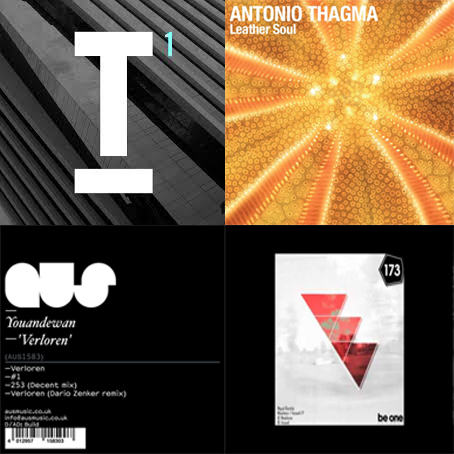
I’d say this is mainly a house music selection, with the first two tracks coming from UK’s powerhouse Toolroom.

Rene Amesz & Mendo manages to create a great groove with a tribal low end and awesome chunky sounds.

Miguel Bastida’s track Moudness was originally released by the end of 2014 but made most of it’s buzz on 2015, amazing first of all because of the tight clap sound and second for the great synth work, vocals and build up.

I discovered Youandewan at a Barzilay Crew event at the Alphabet club in Tel Aviv, became a fan ever since… The set was amazing and the vibe excellent, also merit of this great club which is one of the best in the city in my opinion. This track specifically is introspective and warmly oniric with great bass.

Last but not least a track from the first EP of Spanish artist Antonio Thagma released on Visionquest, an awesome sound managing to be Techno powerful and Electronica sophisticated and interesting at the same time.

That’s all for now. Will there be a part 3? Hopefully before the end of the year! Best,

Yoni

Folkstone – Le Voci della Sera

Hi guys,

It’s time for me to make my first exception here on my blog, as I said I would write primarily about electronic music, but this time I’ve got some great news from a different musical genre I would like to share with you.

Folkstone is a rock band from Italy I have worked many years with. Our collaboration started in the recording studio, I worked with them as a sound engineer and we became close friends and collaborators. We started writing music together and our songs rapidly gained major success in Italy.

Folkstone has one special trademark: the use of medieval instruments such as bagpipes, harp, bombard, cittern and particular flutes. These instruments have all special and unusual sounds, and are great for experimenting unique arrangements.

I have produced their last album, “Oltre l’Abisso”, right before returning to Tel Aviv. I have many great memories with the band, including travelling through Europe when I was their PA engineer.

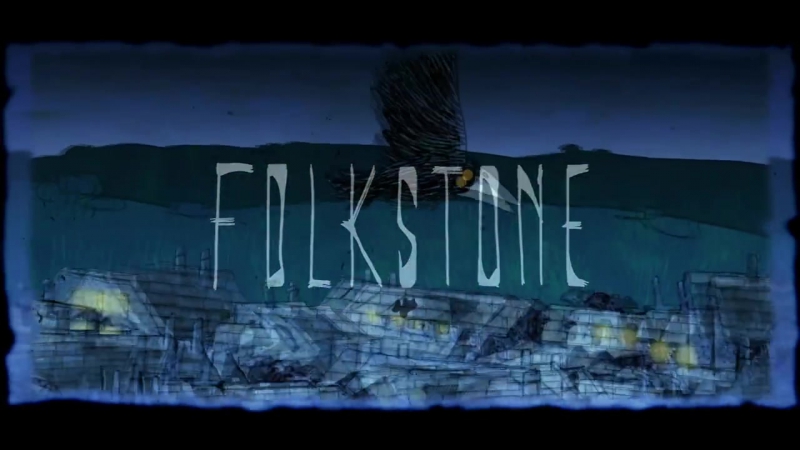
So why am I writing this? This Christmas, Folkstone has released a new video of a song we wrote together on their new album, a beautiful animation video directed by Marco Pavone. This song also features Chris Dennis on the violin as a special guest, he has played with some of Italy’s greatest bands such as Nomadi and Modena City Ramblers.

I hope you enjoy this song! Best,

Yoni

To Sidechain or not to Sidechain?

Greetings music lovers!


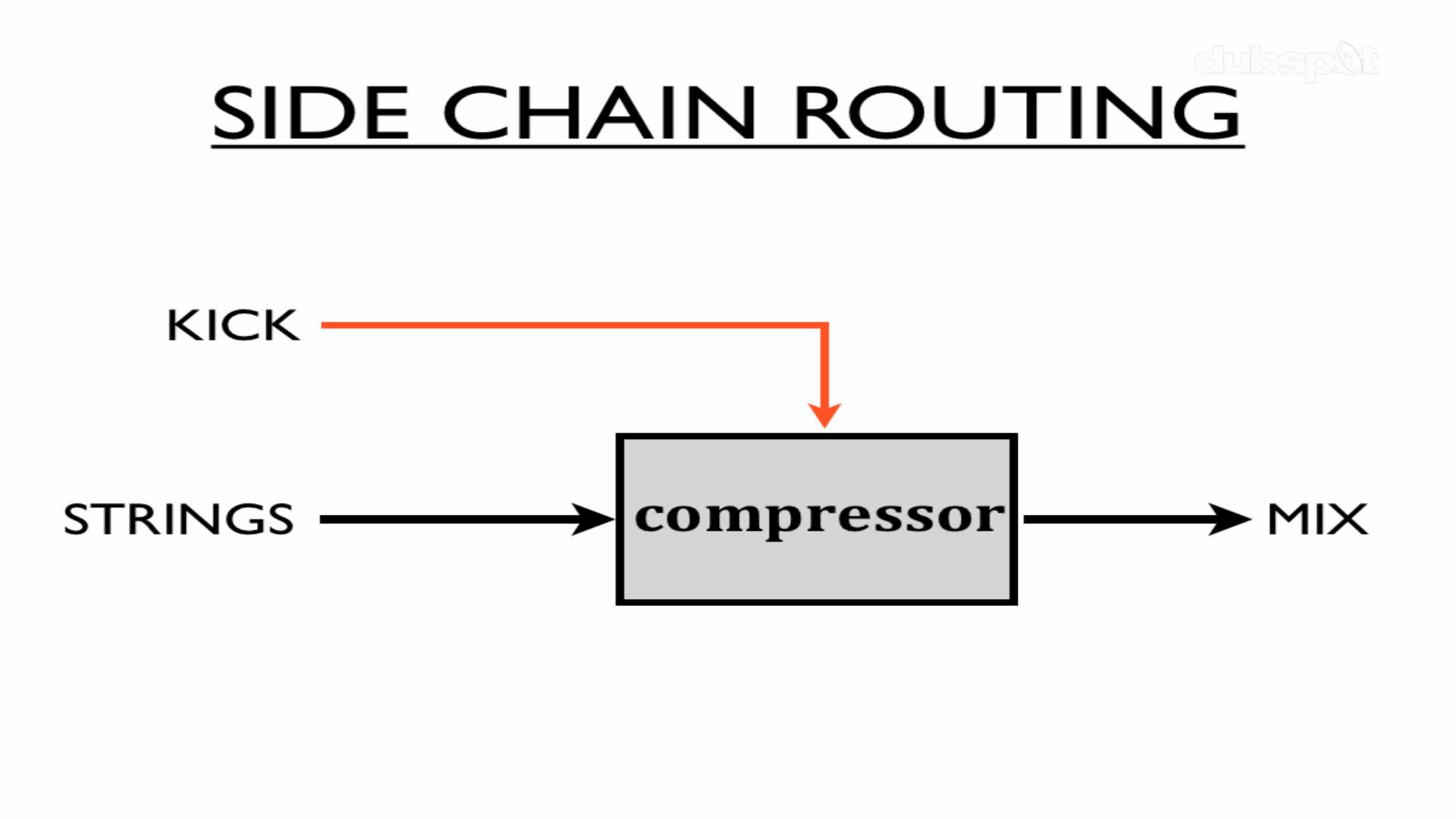
Side-chaining is assuming an ever growing importance in my production work, so I decided to elaborate a list with some of the techniques I know, for the readers of my blog and for myself.  For those of you not familiar with sound engineering, what we are talking about  is using an external signal to trigger the compression of another signal (very clear now…).


  1. Using a kick to duck the attack of another instrument: that’s a classic use, works great with bass, pads etc. One thing I could add about this method is that adjusting the decay time of the trigger signal (the kick probably) could save you a lot of headache in adjusting attack and release time of the compressor. Really makes wonders, helps you fine tune the compression and obtain the effect you are looking for.
  2. Using a rhythmic pattern of one instrument to sidechain another instrument: for example using a rimshot pattern as a trigger while compressing a clap pattern. Especially if the pattern you are compressing is a fixed one, say 1/8th or 1/16th note, that would make cool shifts in level along the trigger pattern. Might need to shift the compressed pattern in time to obtain the desired effect.
  3. Using a trigger to sidechain a reverb: that can generate a world of cool FX, using the good old kick or some funky percussion.
  4. Using sidechain comression on the entire mix: now that’s a tricky one. You should be able to monitor on two separate busses, because you will have to take out some of your tracks out of the master mix, the kick for instance. This can help build a nice overall sound for your mix, used with moderation. This brings up various issues, as not all sound cards will support multiple buss outputs. Also, if you’re used to monitor your mix with some master limiting on the master buss, you won’t be able to do that as the output will be split in two busses. I haven’t yet found a satisfying solution to this with my RME Fireface uc (using Ableton Live), because you can set up a digital loop with an ADAT cable but I already use this for the meter feed…so, I’ve been improvising 🙂

This is what comes to my mind at the moment. An important point is that these are all creative uses as opposed to traditional signal processing, where sidechain is used to smoothly compress a given signal. In a way this is the opposite of the use I have been writing about, which is mainly used in electronic music production technique, because here we are looking to create a special effect, while in the traditional use the purpose would be to smoothly compress a signal and eliminate artifacts.

Will update this list if anything else comes to mind…

Happy whatever it is you prefer,

Yoni